


How to Correctly Size a Backup Generator for Seamless Operations
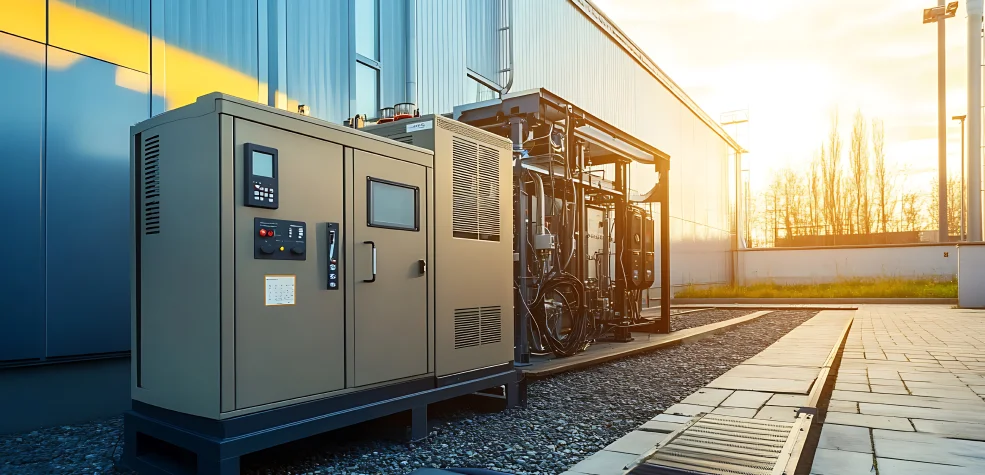
In the industrial sector, guessing is expensive. Nowhere is this truer than when sizing a backup power generator.
Your generator will suffer from frequent overloads, leading to voltage instability, nuisance trips, and potential equipment damage. Conversely, if you vastly overestimate your needs, you waste tens of thousands of dollars on unneeded capacity and risk damaging the engine through a phenomenon known as “wet stacking” (unburnt fuel accumulating in the exhaust due to running too light a load).
Sizing a generator isn’t about picking a number out of a hat. It requires a systematic approach to understanding your facility’s electrical footprint. Here is how to do it right.
Step 1: Differentiate Between Continuous, Prime, and Standby Power
Before looking at loads, define how the generator will be utilized:
- Standby Power: Used strictly for emergency backup during grid failures.
- Prime Power: Used as the primary source of power, typically in remote locations without grid access, running for extended periods.
- Continuous Power: Used to supply a constant load for unlimited hours per year, typically where the load remains relatively stable.
Step 2: Compile Your Full Load Profile
Gather your facility’s utility bills from the past 12 months. Look for your Peak Demand (kW). This gives you a baseline of the maximum power your facility draws at any given moment during peak production.
Next, inventory all critical equipment that must run during a power outage. Divide them into two categories:
- Resistive Loads (Lighting, heating, IT infrastructure): These draw a constant amount of power.
- Inductive Loads (Electric motors, compressors, pumps, HVAC units): These require a massive spike of electricity just to start up, known as inrush current or surge wattage.
Step 3: Account for Surge Wattage (The Inrush Factor)
An electric motor may require anywhere from 3 to 8 times its running power during startup, depending on motor type and starting method. If your backup generator cannot handle this initial spike, it will trip immediately.
Formula Example: If a ventilation pump requires 10 kW to run, but needs 40 kW for the first two seconds of startup, your calculation must account for that 40 kW surge capacity.
Step 4: Map Out a Sequential Start Strategy
You don’t have to buy a massive generator capable of starting every motor in your building at the exact same millisecond.
By implementing a sequential start strategy using advanced Automatic Transfer Switches (ATS), load management controls, and PLCs, you can stagger when major equipment turns on. Bringing your HVAC, pumps, and machinery online in stages drastically lowers the peak surge requirement, allowing you to safely purchase a smaller, more cost-effective generator.
Step 5: Plan for Future Expansion
A generator is a long-term investment. If your facility plans to add a new production line, upgrade its HVAC systems, or expand its footprint in the next three to five years, add 15% to 20% headroom to your final sizing calculation. It is far cheaper to buy slightly more capacity now than to replace an undersized generator in 36 months.
Partner with the Experts
While these steps give you a strong baseline, an exact calculation requires looking at voltage dips, harmonic distortion, and ambient temperature derating factors.
Don’t leave your operational continuity to chance. Contact the Elmot PowerGen engineering team today for a comprehensive, precise site-load assessment tailored to your facility’s unique demands.
Our Recent Blogs
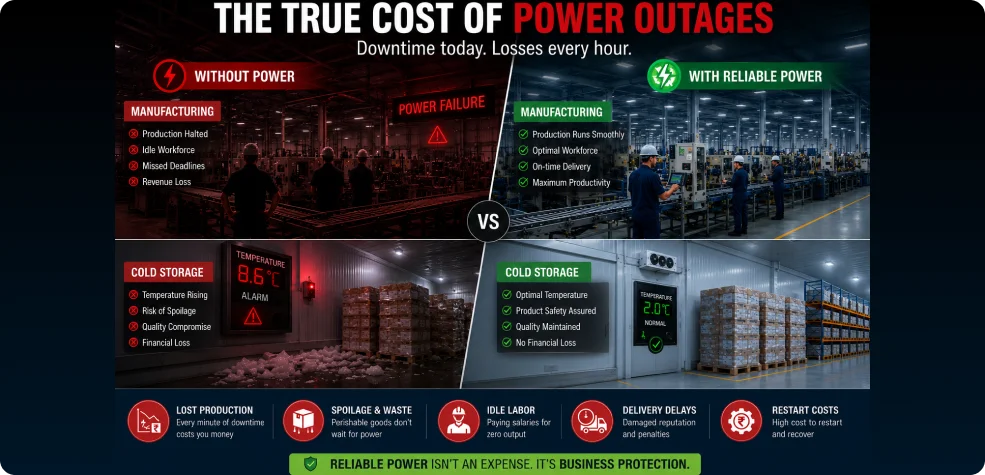
The True Cost of Power Outages on Manufacturing and Cold Storage
Share this post For a consumer, a power outage is an inconvenience solved by a few flashlights. For an industrial…
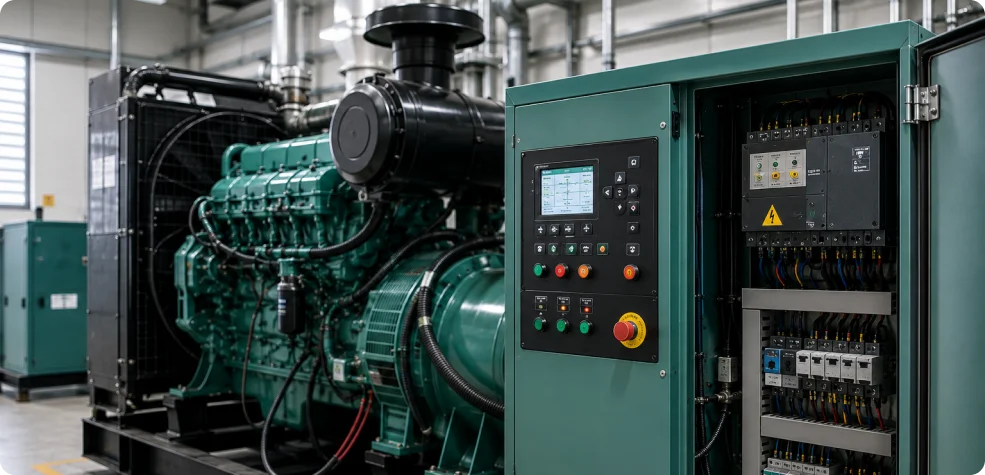
The Ultimate Preventive Maintenance Checklist for Commercial Power Solutions
Share this post An industrial generator is a lot like a commercial insurance policy: you hope you never have to rely…