


The Ultimate Preventive Maintenance Checklist for Commercial Power Solutions
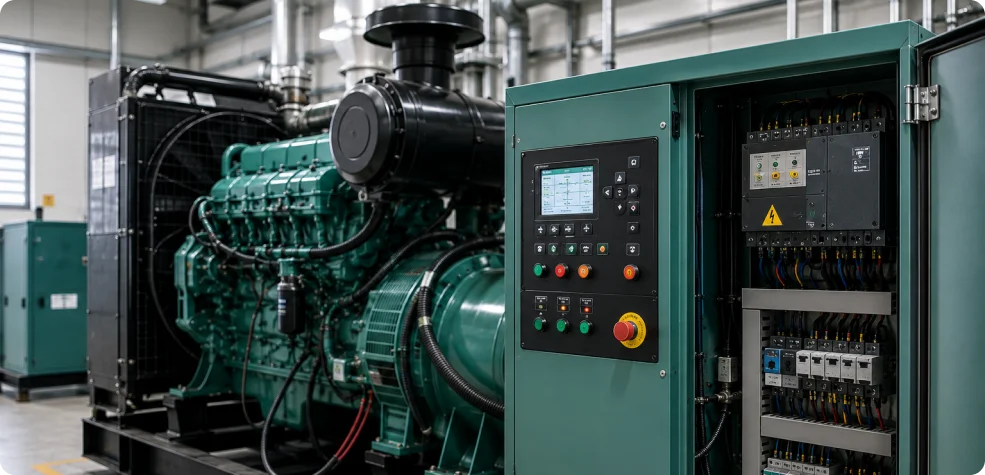
An industrial generator is a lot like a commercial insurance policy: you hope you never have to rely on it, but when you do, it absolutely must work.
However, unlike a paper insurance policy, a generator is a complex mechanical ecosystem. If it sits neglected in a plant backlot for months, it will likely fail to start when an emergency grid collapse occurs. In fact, over 80% of standby generator failures during an outage are completely preventable and trace back to simple maintenance oversights.
To ensure your Elmot PowerGen system delivers engineered reliability when you need it most, your engineering team should implement this structured weekly, monthly, and semi-annual Preventive maintenance checklist.
1. The Weekly Walk-Through (The 10-Minute Visual Check)
Your routine maintenance shouldn’t wait for a monthly schedule. A quick weekly visual inspection catches minor leaks and battery degradation before they turn into mechanical failures.
- Inspect for Fluid Leaks: Look under the unit for any signs of pooling oil, fuel, or coolant.
- Check Fuel Levels: Ensure the primary tank has adequate fuel for at least 24 to 48 hours of continuous operation.
- Inspect the Battery Charger: Verify that the battery charger is operating normally and that the control panel displays no active faults or warning lights.
- Check Engine Coolant: Look at the coolant level gauge to ensure it rests within nominal operating parameters.
2. The Monthly Operational Check (The Test Run)
Running a generator under an artificial or system test environment keeps the internal components lubricated and clear of carbon buildup.
- Execute a No-Load Exercise: Run the generator for at least 30 minutes. Listen for unusual engine knocking, excessive vibration, or erratic exhaust smoke color.
- Check Battery Electrolyte & Terminals: Inspect battery terminals for corrosion or loose connections. Clean the terminals with a wire brush if buildup is present.
- Drain the Fuel Filter Water Separator: Diesel fuel naturally accumulates condensation over time. Drain any trapped water from the water separator to protect your fuel injectors.
- Verify Exhaust System Integrity: Inspect silencers, manifolds, and piping for cracks, loose clamps, or physical blockages.
3. The Semi-Annual Maintenance (The Technical Deep-Dive)
Every six months, your facility team or a certified technician should perform a deeper technical audit of the engine and electrical components.
- Analyze the Lubrication System: Check oil quality, oil levels, and change the oil filter if the unit has hit its designated operational hour threshold.
- Inspect Air Intake Systems: Clean or replace air filters. Check the air intake piping for cracks or debris that could choke airflow to the combustion chamber.
- Load Bank Testing (Crucial for Diesel Units): If your generator primarily runs under light loads during testing, it is highly susceptible to wet stacking (unburnt fuel accumulating in the exhaust). Running a load bank test forces the engine to reach its optimal operating temperature, burning off harmful carbon and residue.
Summary Checklist Guide
| Interval | Core Focus Areas | Primary Objective |
|---|---|---|
| Weekly | Fluids, battery status, control panel alerts | Immediate readiness confirmation |
| Monthly | 30-min exercise run, fuel water separator, terminal cleanup | Operational test & component lubrication |
| Semi-Annual | Load bank testing, oil/air filter replacement, belt inspections | Preventing long-term system degradation |
The Danger of the “Set It and Forget It” Mentality
The single greatest threat to an industrial generator’s lifespan is operational neglect. Modern commercial generators are highly sophisticated machines; they require clean fuel, uninhibited airflow, and healthy electrical charges to fire up instantly during a blackout.
By formalizing this checklist within your facility’s standard operating procedures (SOPs), you actively protect your initial capital investment, extend the lifespan of your unit by years, and protect your business against catastrophic downtime.
Our Recent Blogs
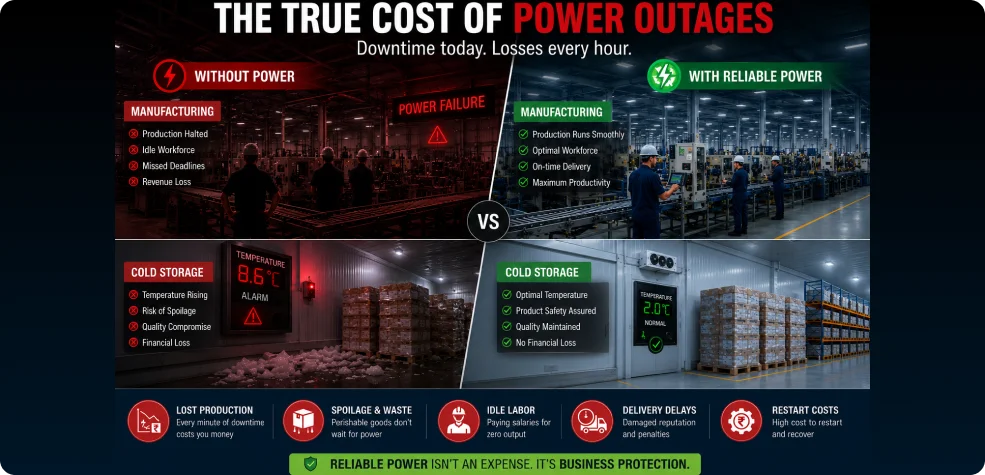
The True Cost of Power Outages on Manufacturing and Cold Storage
Share this post For a consumer, a power outage is an inconvenience solved by a few flashlights. For an industrial…
How to Correctly Size a Backup Generator for Seamless Operations
Share this post In the industrial sector, guessing is expensive. Nowhere is this truer than when sizing a backup power…